The Journey
Seven days
for one evening.
The heart of the method
This is not a restaurant.
It is an inquiry.
Before any plate, the Chef invites you to introspection: ten questions that do not ask what you want to eat, but who you are. Memories, colours, seasons, silences. Not a menu — a self-portrait. It is from those words that the dinner begins to exist.
What childhood memory still brings you, to this day, the scent of a kitchen?
If your character were a colour, what would it be?
What do you seek in a gastronomic experience that you have not yet found?
The Request
You fill in the form and tell the occasion: an anniversary, a dinner among friends, a moment that deserves a work. No commitment — it is only the beginning of the conversation.
The Pact
The Chef opens your atelier and invites you to introspection: a questionnaire that does not ask what you want to eat, but who you are.
The Introspection
Ten questions, one at a time, without haste. Memories, colours, seasons, silences. Your words become the weft of the plate.
The Study
A week. The Chef notes every reflection in the diary of the experience: studies of ingredients, sketches, interpretations of your character. You can read the diary as it takes shape.
The Quote
The menu built upon you arrives — not a price list, but a primary work with its own value. The quote is born from the study and from the complexity of the experience.
The Dinner
The chef arrives at your home. The plate you watched being born in the diary takes shape before you. A theatre performed only once, with you in the lead role.
The atelier that opens
After the request,
the chef opens your atelier.
What you see here is a taste — example voices, not yours. When you request the dinner, the Chef opens a private space where your answers become the diary of the experience. Only you and he can read it, as it takes shape.
The diary, in preview
Four phases in seven days: study, sketch, interpretation, construction. Every annotation is dated and signed by the Chef's hand.
- IStudyDay I
I am reading her answers. She wrote «blue» — but not the colour of the sky, the blue of her grandmother's ceramics. I seek the blue that can be eaten.
- IISketchDay III
Lobster, for now. His energy is in the shell: the red that comes after. But something raw is missing — he is also that.
- IIIInterpretationDay V
He is not a man of contrasts. He is a man of passages. The plate must cross the raw and the cooked without a seam. Tagliatelle, then, with a lobster stock that cooks slowly.
- IVConstructionDay VII
The menu is written. Six courses, each with a colour of his life. The last is the dessert: his mother's mandarin, the one she peeled in winter.
The plates you see being born in the diary have a geography. Every ingredient arrives from a point in the world and meets another: it is here that East and West recognise each other.




The gesture that precedes
A scent
before the plate.
Seven days before the dinner, a small box reaches your home. Inside, a card: not the menu, but the essences that will inhabit it.
Yuzu, saffron, cuttlefish ink, toasted almond. Fragrances sealed in Japanese paper, to be opened one at a time. It is not a preview of taste — it is a training of memory. When the evening arrives, you will recognise the plate before even tasting it: you will have already dreamt it.
A ritual that sells nothing — it gifts an anticipation. The olfactory box is a gift of the study, not a commodity.
Olfactory Quiz
Eight questions to understand your nose
There is no judgment, only listening. Choose between two scents — the one that calls you, not the one you think you should choose. The result will help the Chef design a menu that resembles you.

The value
Every dinner is a unique work: the price is born from the study, from the number of guests, from the complexity of the interpretation.
My sources
The books that
cooked me.
Every plate carries centuries of thought. These are the texts the Chef draws from — ancient recipe books where cooking was already philosophy, long before it was technique.
The Cook of Baghdad
Muḥammad al-Baghdadi · 1226
The oldest known Arabic recipe book. One hundred and sixty-four recipes from the last splendour of the Abbasid caliphate: sweet-and-sour stews, saffron, almonds, citrus, pomegranate. From here the East began to perfume the cuisine of Europe.
De re coquinaria
Marcus Gavius Apicius · 1st c. AD
The recipe book of ancient Rome. Complex sauces, garum, spices from the East: the first text in which cooking becomes literature.
Kitāb al-Ṭabīkh
Ibn Sayyār al-Warrāq · 10th century
Three centuries before the Cook of Baghdad, already in Baghdad over six hundred recipes were gathered. An encyclopaedia of flavours, health, and table etiquette.
Libro de arte coquinaria
Maestro Martino da Como · ca. 1465
The cook of the Italian Renaissance. His recipes marked the passage from medieval to modern cuisine, and inspired every cook who came after.
Opera dell'arte del cucinare
Bartolomeo Scappi · 1570
Cook to Pope Pius V. Over a thousand recipes and the celebrated engravings of the papal kitchens: the summit of Renaissance gastronomy.
The gallery
The repertoire,
in black and white.
Starters and first courses where fish meets the East. No meat — interpretation. These are demonstrations of the aesthetic, not of the menu: every dinner is built upon you.

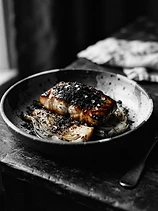
Pescatrice Laccata al Miso Bianco con Finocchi Agrodolce e Polvere di Nori
Coda di rospo glassata al miso bianco, finocchi brasati in agrodolce e polvere di alga nori croccante.

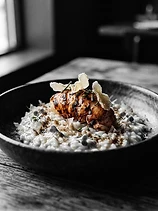
Risotto all'Astice con Dashi di Katsuobushi e Zenzero Candito
Riso Carnaroli mantecato con dashi affumicato, astice scottato e zenzero candito croccante.

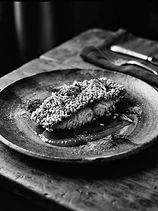
Branzino in Crosta di Riso Soffiato, Salsa al Sakè e Finocchietto
Filetto di branzino croccante avvolto in riso soffiato, salsa ridotta al sakè e miele, polvere di finocchietto selvatico

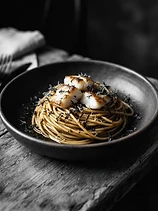
Spaghetti al Ricciola, Brodo di Konbu e Bergamotto
Spaghetti trafilati al bronzo mantecati in brodo di konbu e katsuobushi, ricciola scottata e scorza di bergamotto grattugiata

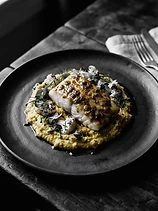
Baccalà Glassato allo Yuzu Kosho con Purea di Cavolfiore al Curcuma
Baccalà confit, glassa di yuzu kosho e miele, purea di cavolfiore speziata

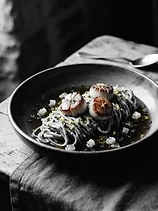
Tagliolini al Limone con Capesante e Brodo di Konbu
Pasta tirata a mano, capesante scottate, brodo dashi al limone e zenzero candito

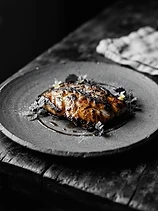
Rombo Laccato alla Miso e Burro Nocciola
Filetto di rombo marinato nel miso bianco, laccatura al mirin, finitura con burro nocciola e polvere di yuzu.

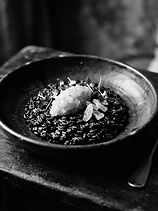
Risotto al Nero di Seppia e Dashi di Kombu
Riso Carnaroli mantecato con nero di seppia, brodo dashi, zenzero candito e tartare di seppia cruda.

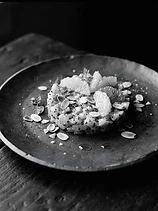
Sea bass tartare
citrus, toasted almonds

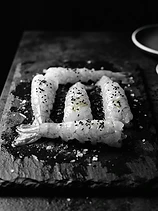
Raw langoustines
yuzu oil, black sesame

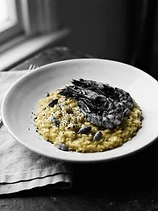
Saffron risotto
red prawns, cardamom

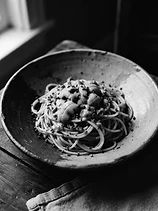
Sea urchin spaghetti
dashi, chives

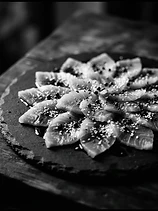
Tuna carpaccio
sesame, lime, pink pepper

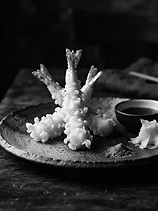
Prawn tempura
matcha salt, ginger

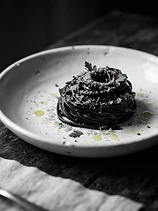
Cuttlefish ink tagliolini
bottarga, fresh herbs

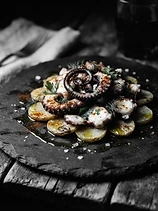
Octopus salad
potatoes, smoked paprika

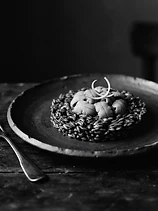
Cuttlefish ink risotto
sea urchins, lemon zest

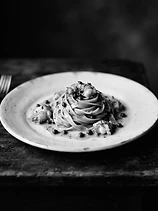
Lobster tagliatelle
caper butter, vanilla

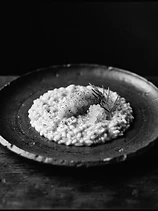
Seawater risotto
red prawn, lemon caviar

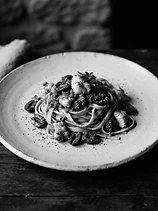
Chitarra with monkfish
taggiasca olives, fennel pollen

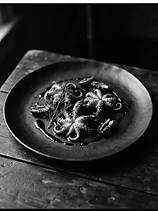
Confit baby octopus
dates, fish sauce

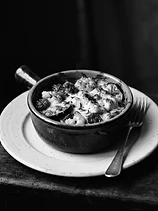
Sea parmigiana
aubergine, amberjack, salted ricotta
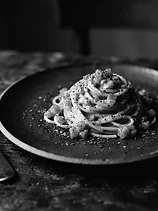
Sea carbonara
red prawn, sea urchins
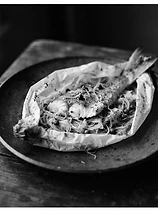
Sea parcel
wild fennel, capers
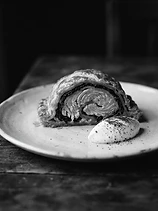
Wild salmon Wellington
spinach, puff pastry, dill
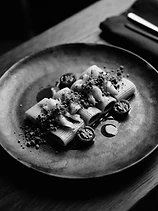
Paccheri with confit amberjack
kombu dashi, Bronte pistachio, yuzu
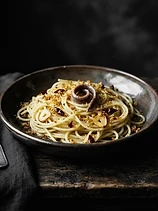
Garlic, oil and chilli spaghetti
80s method · anchovy, toasted marinated bread
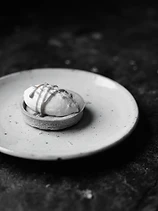
Vanilla tartarin
minimal dessert · sablé pastry, caramel, mandarin zest
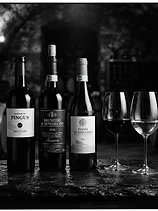
The bottles
Dominio de Pingus · Brunello di Montalcino · Fiano di Avellino
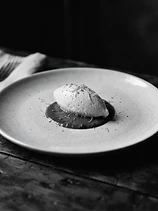
Amberjack quenelle
Franco-Sicilian · crustacean bisque, Sicilian citrus, fennel pollen

Ready to begin?
Your dinner begins seven days before it is cooked.
Request your dinnerTo request, an account is needed — you can create one in moments, with Google too.